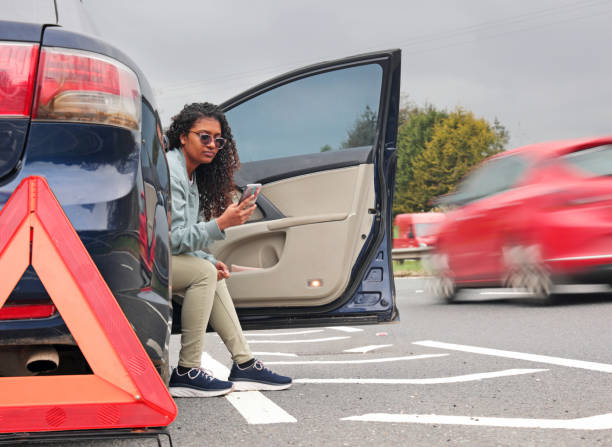
When you call a towing company, the most useful information to give the tow truck driver is your exact location, vehicle year and model, what happened, whether the vehicle starts, whether it rolls and steers, and where you want it taken.
After more than 30 years of towing experience, I can tell you that a few accurate details at the beginning of the call can make the entire process easier. The goal is not to diagnose the vehicle over the phone. Instead, we need enough information to understand the situation and what type of service may be required.
1. Give Your Exact Location
First, tell the tow truck driver exactly where the vehicle is located.
An address is ideal. However, roadside emergencies do not always happen near a clear street address.
If you do not know the address, provide details such as:
- The road or highway name
- Your direction of travel
- The nearest intersection
- The closest highway exit
- A mile marker
- A nearby business or landmark
- The name of a hotel, apartment complex, shopping center, or parking garage
Your phone’s mapping app can also help you identify your exact location.
For example, saying “I’m on I-4” is not enough. Saying “I’m westbound on I-4 just past Exit 82 on the right shoulder” gives the driver much more useful information.
2. Tell Us What Vehicle You Have
Next, provide basic vehicle information.
Try to give the:
- Year
- Make
- Model
- Color
- Vehicle type, such as car, SUV, pickup, or van
This information helps identify the vehicle and gives the towing operator a better idea of its size and general configuration.
If the vehicle has modifications, oversized tires, unusually low ground clearance, or another condition that may affect towing, mention that too.
3. Explain What Happened
You do not need to know exactly what is mechanically wrong. Simply explain what happened before the vehicle stopped.
For example:
- The engine suddenly shut off
- The vehicle overheated
- The battery appears dead
- You have a flat tire
- You ran out of fuel
- The vehicle was involved in an accident
- The transmission will not engage
- The vehicle became stuck
Those details help determine whether you may need roadside assistance, towing, or vehicle recovery.
4. Does the Vehicle Start and Run?
Tell the tow truck driver whether the engine starts.
If it starts, also explain whether it stays running normally or immediately shuts off again.
A vehicle that starts but cannot safely move may still need towing. Likewise, a vehicle that will not start could have a simple battery problem or a more serious mechanical issue.
Therefore, avoid guessing. Just describe what the vehicle is doing.
5. Does the Vehicle Roll, Steer, and Brake?
This is one of the most useful pieces of information you can provide.
Tell us whether the vehicle:
- Rolls freely
- Can be shifted into neutral
- Steers normally
- Has working brakes
- Has all four wheels and tires intact
A vehicle with locked wheels, broken steering, damaged suspension, or missing wheels may require a different approach than a vehicle that simply will not start.
6. Mention Any Accident Damage
If the vehicle was involved in an accident, describe the visible damage.
Important details can include:
- Damaged or missing wheels
- Flat tires
- Steering damage
- Body panels rubbing against tires
- Broken suspension components
- Leaking fluids
- Deployed airbags
A damaged vehicle may not be safe to drive even if the engine still runs.
If the vehicle has collision damage, our Accident Towing page explains more about transporting damaged vehicles.
7. Tell Us About Fluid Leaks, Smoke, or Overheating
Always mention anything unusual that you see or smell.
For example, tell the driver if you notice:
- Coolant under the vehicle
- Oil or another fluid leaking
- Smoke
- Steam
- A burning smell
- A high temperature warning
These details can indicate that the vehicle should not be driven.
If there is an active fire, immediate danger, or someone is injured, call 911 first.
8. Where Do You Want the Vehicle Taken?
If you need towing, have a destination in mind whenever possible.
That destination might be:
- Your mechanic
- A dealership
- Your home
- A storage facility
- Another authorized location
If you are unsure where to take the vehicle, say so. However, knowing the destination helps determine the towing distance and can affect the overall service.
For longer trips, you can also review our Long-Distance Towing information.
9. Tell Us About Parking Garages, Gates, and Property Access
Access matters almost as much as the vehicle condition.
Tell the tow truck driver if the vehicle is:
- Inside a parking garage
- Behind a security gate
- Inside an apartment complex
- On hotel or resort property
- Inside a gated community
- On private property
- In a tight or unusually difficult parking space
Also, mention low-clearance entrances, security checkpoints, locked gates, or other restrictions before the truck arrives.
This is especially important in Downtown Orlando and the Disney and Lake Buena Vista area, where garages, hotels, resorts, and private properties are common.
10. Send Photos When the Situation Is Unusual
Sometimes a short description does not fully explain the situation.
Photos can be particularly helpful when a vehicle:
- Has significant collision damage
- Is stuck off the roadway
- Has missing or damaged wheels
- Is positioned in a tight location
- Has unusual access conditions
A photo can often communicate the vehicle position or damage more clearly than a long explanation.
What Should You Have Ready Before Calling a Tow Truck?
Here is the short version. Before you call, try to have these details ready:
- Your exact location
- Your vehicle year, make, model, and color
- A description of what happened
- Whether the vehicle starts and runs
- Whether it rolls, steers, and brakes
- Any visible damage, flat tires, smoke, or leaks
- Your requested destination
- Any gate, garage, or property access restrictions
You do not need perfect answers to every question. However, the more accurate information you can provide, the better we can understand what you need.
What I Recommend After 30+ Years of Towing
When people call for a tow, they are often frustrated, stranded, or worried about what comes next. That is understandable.
My advice is to focus on the basics: where are you, what vehicle do you have, what happened, and what condition is the vehicle in?
You do not need to diagnose the problem. Give the tow truck driver what you know, and do not guess about what you do not know.
Clear information helps everyone make better decisions about the next step.
Need a Tow Truck in Orlando or Central Florida?
If your vehicle is disabled, damaged, stuck, or needs transportation, call Orlando Tow & Recovery.
Tell us where you are, what vehicle you have, and what happened. Then, we can discuss the appropriate service and current availability.
We serve Orlando and selected surrounding Central Florida service areas.
About Wrecker Driver
Wrecker Driver shares practical towing, roadside assistance, vehicle recovery, and road safety advice backed by more than 30 years of experience.
Leave a Reply